
Years ago a family vacation out west landed us in the middle of some of the largest living organisms on this earth, the Giant Sequoias, Sequoiadendron giganteum. They really are an awe-inspiring marvel of God’s creation. (And yes, I know we over-use the word “awe,” but it is indeed appropriate here in its truly unique sense.) These noble goliaths are the world’s largest single trees with a height of up to 279 feet. That’s about as tall as a football field is long! Just 7 yards short. Not only is their heavenward reach staggering, the bole (trunk) of these massive trees can grow to be thicker than the Great Wall of China is tall, having widths of up to 26 feet. Our whole family of 6 joining hands couldn’t even reach around them. It’s really incomprehensible if you’ve never seen them in real life, kind of like Niagara Falls. Standing beside one of these giants, a phrase from an old song sung by The Regeneration came to my mind: “How small we are, how little we know.” (The line comes from a very profound poem written by Earl Wilson, Jr., which you’ll find printed at the end of this article.)
On our trip, following a short car ride from El Capitan to the Mariposa Grove, we were able to stroll among these 500 or so ancient, towering plants. The kids couldn’t control their exclamations and observations, but neither could mom and dad. We read all the plaques placed throughout the wooded hillsides which labeled them with specified height-diameter-circumference as well as other pertinent information, historic significance, and often names given to them by park rangers or visitors.
As you might imagine, 500 of these giants took up many acres of land, so we chose to do the suggested guided tour to see more of the area than we were willing to trek through on foot with our kids. The ride was informative as well as beautiful, not to mention scary, as a thunderstorm rolled through while we were on the tour, but that’s a story for another day. We learned so many more things from the studied tour guide than we had picked up by viewing exhibits and reading signs. The most powerful and memorable fact for me had to do with the sequoias’ roots.

Adults all realize the purpose of roots for all plants is to take in water and minerals from the soil. We understand that the roots anchor the tree in storms, and the Giant Sequoias’ roots are no exception. There are some amazing differences in the roots of these gargantuan trees that set them apart from most other trees. They have relatively shallow roots for their size, averaging only 5 feet in-depth underground. The roots are also far-reaching, commonly extending 100 feet from the bole and covering as much as 1-4 acres! Shocking, I know. Especially when you are standing among them or looking at pictures of a grove of these redwoods. The eye observes and the mind contemplates their proximity to one another and instinctively realizes that the individual trees do not stand an acre apart. So what’s going on?
Roots of these massive plant creatures intertwine. Underneath the soil each Giant Sequoia’s roots lengthen and spread and weave their way among other roots branching out and intertwining. Each individual tree’s roots may spread and intertwine with many other individual’s roots spreading out through their plot of growth. They form a subterranean network.
Even more amazing is a natural process they go through called “root grafting.” In root grafting these tangled roots rub against each other, their root bark rubs off, and over time the roots grow and fuse together offering stability in the winds and a sharing of primary resources and secondary compounds produced by the trees themselves. They become interdependent, helping one another out.
As our tour guide gave us his rehearsed description and explanation of the roots of these sequoias, I was overcome with excitement. My mind immediately went to community. To not just this grove of trees, this community, but to community within the body of Christ.
 We toss the word community around these days in an off-hand way. It’s a buzzword for this generation. We’ve trivialized it to the point it’s just a grandiose word for your group of friends, those you hang out and socialize with. We want to be a part of the forest and still be our own individual tree. We want to be accepted and included and involved (when we’re not too busy!), but we don’t want the responsibility of reciprocating that acceptance and inclusion and involvement in the lives and problems of others. We sacrifice relationships and the community that is built when we screen our calls to avoid that difficult encounter or manipulate a social setting to our liking.
But Biblical community calls us to much more. Biblical community is very much like a stand of Giant Sequoias. In Biblical community we are each individuals, but our roots are linked and intertwined by choice. We grow together through the mundane, the devastation, and the wearying, as well as through the joys, triumphs, and successes. We are each growing and using our own roots, but we’re there to sustain, strengthen and hold up our fellows in community during the blustery storms that threaten us. We affect each other. We distribute to those within the community so that needs are met. We help one another adapt and learn and become a stronger tree. The concept of Biblical community is woven throughout the Apostle Paul’s writings, but is summed up nicely in the following verses:
Do nothing out of selfish ambition or vain conceit. Rather, in humility value others above yourselves, not looking to your own interests but each of you to the interests of the others. Philippians 2:3-4
Biblical community involves looking out for the interests of others. Helping stabilize them when the storms come by praying, encouraging, serving, coming alongside them. Sharing resources from my root to yours and yours to mine, mentoring, tutoring, feeding, financing, hugging, teaching, carrying, loving.
We are small. We are interdependent. We long to be the mighty Sequoiadendron giganteum of the world who stand strong, intertwined, sharing roots and resources, pointing men to God!

How Small We Are How Little We Know
We laugh, we cry,
We live, we die,
and when we’re gone, the world goes on.
We love, we hate, we learn too late,
How small we are, how little we know.We hear, we touch, we talk too much,
of things we have no knowledge of.
We see, we feel,
yet can’t conceal,
How small we are, how little we know.See how the time moves swiftly by,
We don’t know how, we don’t know why.We reach so high, and fall so low,
The more we learn, the less we know.Too soon the time to go will come,
Too late the will to carry on,
And so we leave too much undone,
How small we are how little we know.~ Earl Wilson, Jr. ~
 My Mama’s mama, my Mam-Maw was green before it was even a thing. She composted before it had a name in hoity-toity magazines as a way of enriching one’s soil. She never discarded a non-biodegradable milk jug in the trash. She repurposed them into bird feeders, kitchen scrap collectors, toilet brush holders, and ice water containers. She would fill them with water from her kitchen tap and place them in her ancient non-frost free refrigerator. I can still remember my sister and I scraping the “little ice” from her freezer and eating it – we ate shaved ice before it was even a thing! That milk jug ice water was the coldest and best tasting water. I’ve had all manner of bottled waters since and they all pale in comparison.
 She loved trees, she loved to watch them and smell them. She would go outside, sit, and then she’d grow quiet. She would speak only to point out a squirrel nest or a particular kind of bird home. She used to tell me that each of her grandkids was represented by a particular kind of bird. I wish I’d had the foresight then to remember everyone’s. I only remember mine. A Robin red breast, she’d say “because they are unique and Mamie you are a unique youngin.” She saw something in me I reckon that I didn’t and evidently the Robin red breast had the same qualities.
 I was spending an afternoon doing the aforementioned, when I thought about life-giving trees. As I exhaled deeply, the thought that my carbon dioxide would be turned into oxygen confirmed that life-giving hypothesis. I pondered on and chatted with the King and I recollected another kind of life-giving tree. The one my precious King was nailed to. The tree that ran red with blood spilled so that I could enter the Holy of Holies and talk freely with the God of the universe. A tree that lent itself to an unimaginable death so that I, we, could be part of a new covenant established and be in relationship with God.

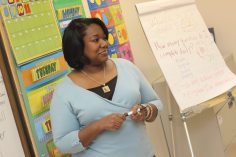 become National Teacher of the Year that would require development as well. It would mean getting the proper education and training. It would also require development in specific areas: classroom management and organizational skills, understanding children and learning styles, getting continuing education and National Board certification, and mastering the dynamics of being a highly contributing, highly respected part of a faculty.


 a welcome and frequent diversion. I remember spending those first of many pool-going times counting. Counting people to make sure all were afloat, no one had drowned on my watch. I also spent a lot of time treading water. Hours in the deep end turned to days it seemed. Teaching children the art of something that is second nature to me, something I could do long before I could walk. Reaching for little hands extended in my direction constantly encouraging and cheering on, “just a little farther, you can do it.” Reassuring time and again that the water was nothing to be really afraid of but to be watchful and on the alert at all times, a healthy fear, is what my Mama calls it.
 These trees that surround that place have witnessed much. In the Martin home alone it witnessed, Ellie Grace’s first steps, the emotional caution that always follows a period of uncertainty, countless refereed arguments amongst those named Martin, milestone birthdays, a visiting raccoon that had a hankering for sweets, his craving quickly satisfied by said arguing Martins. Each upcoming school year lesson plans laid out and navigated on the umbrella covered wrought iron table, none exceptionally level, but very functional all the same.



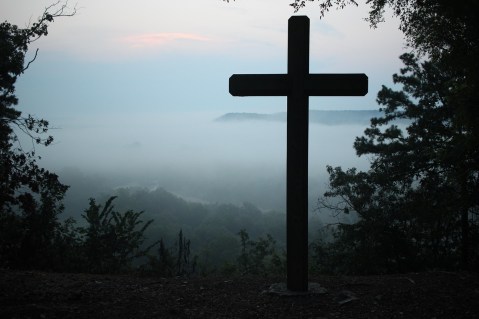



 “For he grew up before him like a young plant, and like a root out of dry ground; he had no form or majesty that we should look at him, and no beauty that we should desire him.”



 When the tire blew out I simply stated the obvious and the drive to a safe spot was a difficult one.


 Priceless