Back to Basics: God’s Word 2

Hey! Good to see you again! Grab your Jasmine Tea or whatever your favorite beverage is. I’ve got my cup of Breakfast Blend.

So… have you just been doin’ it? Your personal Quiet Time alone with God each day, that is. Have you? This stuff builds upon itself you know. Walk in obedience to the truth you’ve already been shown.

Enough check up and lecture, on to business. A couple of months back Michele mentioned some of these ideas, but there is much to be gained from examining differing perspectives.

A huge part of our quiet time each day is reading and studying God’s word. I hope you chose a Bible reading plan and are well into it. If you’ve kept up with a monthly whole Bible reading plan, you’re probably about 20% Of the way through! On fifth! Way to go! If you haven’t started but would like to, jump in! There’s never a bad time to begin searching out the Father’s Word.

Here are some tips and ideas that may help you read & get the most from scripture study:

  • What version of the Bible should you use? King James version is lovely and poetic, but difficult for some to read because of its archaic English. NASB, ESV, NLT, and NIV are all quality translations, NIV being the easiest of the 4 to read. Modern day versions (The Living Bible, The Message) are acceptable for reading but more difficult to use for deep study. Choose what works best for you. You can try them out online at Bible Gateway.
  • Always pray for God to open your eyes and heart before you begin studying His word. Ask for a teachable spirit. John 14:26 tells us that “the Holy Spirit, whom the Father will send in my name, will teach you all things and will remind you of everything I have said to you.” Ask the Holy Spirit to do that for you each time you study.
  • Journal. Write down questions, insights, and things you want to study more later, as well as prayer needs and answers.
  • Mark in your Bible. 
    1. Underline verses the Lord has “written there just for you” or so it seemspexels-photo-38048
    2. Put the date in the margin beside important lessons God has shown you, words of encouragement, or answers to prayers.
    3. Also jot in definitions of words or brief explanations of the test that you pick up from sermons or devotionals.
    4. Put a simple question mark in the margin beside things you don’t understand. As you read scripture day after day, week after week, and year after year, the Lord will instruct you and you will one day look back on that little question mark and think, “Wow, that is so clear now. I remember when I didn’t understand that spiritual concept.”
  • Bible Reading Plans. Consider using one of the many Bible Reading Plans available to keep you on track and consistent. Whether you want to read the New Testament in a year, read the whole Bible chronologically through in a year, read more leisurely savoring every verse, or completely read the Bible in 26 days (Yes! There is a plan for that!), a Bible reading plan you choose to fit your needs and desires will help hold you accountable. Here are a few websites that offer these plans: Bible PlanBible Reading Project, or even check out Pinterest for more.
  • Search for other scriptures on a topic. Use Bible Gateway to search for more scriptures. If you read a verse about “baptism” and think “I need to know more about Baptism”. Then go to Bible Gateway and type “baptism” into the search box at the top of the page. It will provide other verses you can read for more insight.
  • Read commentaries for explanation of a text. Commentaries can be purchased at a book store or accessed online. Precept Austin is a good site that offers in-depth information. There is a search engine for the site on the main page where you can look for more info on a scripture.
  • Do a word study of the original Greek or Hebrew term. What? You don’t read Greek & Hebrew? Neither do I. But Stong’s Exhaustive Concordance contains every word from scripture listed alphabetically. Use it to look up a specific word and find the original meaning. For instance, you read John 16:7 about Jesus going away and sending “another comforter.” You wonder what exactly the word “comforter” implies, so you look it up in Strong’s and find the Greek word paraklētos. You then study the definition and it broadens your understanding of the words of Christ. (More on how to do word studies in a later post.)
  • Memorize it! We are instructed to hide God’s word in our heart. What? You say you CAN’T?! You Can! Here are some ideas:
    1. Write a verse on your bathroom mirror with a marker and read it every day while you brush your teeth. (I’ve memorized whole chapters this way!)
    2. A variation of the above: On day 2 or 3 of reading the verse, erase 3-5 key words and see if you can say the verse. Every couple of days erase a few more words until you can finally say it with nothing on the mirror.
    3. Use the app Fighter Verses on your smart phone, iPad, or computer. It offers memory helps, games, etc.
    4. Set your screen saver or lock screen to display your memory verse until it is learned.
    5. Sing the verse!
  • Listen to it! Either on audio Bible or sermon podcasts. Listen when you commute to work or while you’re working out or cleaning house or rocking the baby. And of course, attend your local church and listen to your pastor teach on scripture, hear Sunday School lessons, and participate in women’s Bible studies available in your area.
  • Live it! “So get rid of all the filth and evil in your lives, and humbly accept the word God has planted in your hearts, for it has the power to save your souls. But don’t just listen to God’s word. You must do what it says. Otherwise, you are only fooling yourselves. For if you listen to the word and don’t obey, it is like glancing at your face in a mirror. You see yourself, walk away, and forget what you look like. But if you look carefully into the perfect law that sets you free, and if you do what it says and don’t forget what you heard, then God will bless you for doing it.” James 1:21-25

For more ideas check out this article from the Navigators on how to study your Bible.

Mmmm! My coffee was so good! But sharing Bible study tips was even better. What about you? Do you have specific Bible study tips you’d like to share with the rest of us? We’d love to hear from you!

 
word20hand202005
 Hand image courtesy of Bible.org. https://bible.org/seriespage/22-hand-illustration-first-finger-hearing

Back to the Basics: Prayer

So do you have your coffee, tea, or cocoa? Ready to chat? We as women love to talk. We are relational. We thrive on deep communication, being known. With that in mind, let’s jump right in!

Prayer is one of the most important things in the Christian walk. Prayer coupled with the Word of God forms our conversation with the Lord. Communication. He speaks to us through His word; we speak back to Him through prayer. Then we listen…. I personally like to listen with a pen and journal. That way when He impresses something on my heart I can write it down, contemplate it, pray more about it, and obey when He calls for action.

Would you agree that prayer is very important in the Christian walk? Most Christians will agree with that, I believe. Then why do we treat it so casually? Why do we not pray frequently, boldly, and confidently to our Father who loves us? And if we pray intentionally and frequently, daily even, in our quiet time at least, why do our prayers often end up sounding like a child’s Christmas wish list to Santa? Why do few Christians practice walking in the “praying without ceasing” mindset we are instructed to in 1 Thessalonians 5:17? Why do we not have the “peace that passes understanding” that we are promised in Philippians 4:7 after we pray? Why do we pray and then find ourselves surprised when something miraculous happens in answer to our prayers? Please hear my heart here, I’m not asking in an accusing way! I’m asking myself why I do these things too?

A photo by Ben White. unsplash.com/photos/BtNxJsFOjtQI believe prayer is one of the simplest yet most profound and powerful parts of our life with Christ. It is beyond our understanding in many ways. Prayer is so simple that a little child can do it, yet so powerful and profound that it intimidates lawyers and doctors. It can be sporadic or a disciplined pursuit. Prayer is earthly words spoken that are then acted on by all the power of our Omnipotent Creator. It is at the same time practical and mystical, in that it is a practical action we are instructed to do by scripture, yet it has spiritual ramifications that are beyond our comprehension. Prayer sets in action the spiritual forces in the heavenly realms and is eternal. When we pray a prayer it is never lost floating around in space. Revelation 5:8 tells us “And when he had taken it, the four living creatures and the twenty-four elders fell down before the Lamb. Each one had a harp and they were holding golden bowls full of incense, which are the prayers of God’s people” and they are there in heaven eternally before the Father.
Whole books have been written on prayer. So of course I cannot touch on every facet of prayer in one short blog post. I will mention a few resources I love at the end of this post. So for the rest of the article I will focus on carrying through with prayer in your daily life. I’ll offer some ideas for being intentional and organized in prayer.

Tips for a flourishing prayer life:

1. Make prayer and Bible study a priority.

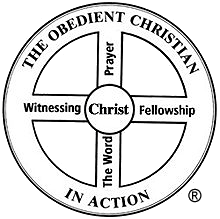
If prayer coupled with Bible study is a conversation with God, then we need to make it a daily activity, and many times a day. We women would not be pleased if our husband, boyfriend, or best friend, only had a conversation with us on Sunday! So why would we think a relationship with God can be sustained without intimate conversation on a regular basis? God speaks through His Word, and we respond to Him through prayer – that’s the conversation. I love the Navigator’s “Wheel” illustration. It refers to prayer and the Word as the vertical spokes of a wheel – us reaching up to God and Him speaking to us. (I’ll include it at the bottom of this article, and we’ll discuss the 2 horizontal spokes of the wheel in other articles.)  And without these spokes our wheel of life becomes a flat tire to drive on.

2.Start the day off with prayer.

Make it a habit to go to God first thing in the morning. Start your day talking with Him. Set the clock for 15 minutes earlier than you would normally rise, then gradually increase the time you spend. It’s worth every moment.

3.Pray scripture.

One of the most powerful ways to pray is to speak God’s words back to Him. There is power in the Word of God! As Isaiah 55:10-11 says, “As the rain and the snow come down from heaven, and do not return to it without watering the earth and making it bud and flourish, so that it yields seed for the sower and bread for the eater, so is my word that goes out from my mouth: It will not return to me empty, but will accomplish what I desire and achieve the purpose for which I sent it.” Just personalize verses that speak to the issue you are praying over.

Example. Praying scripture using Hebrews 12:1-3 might go something like this:“Lord, As I’m facing tough times ahead and since I’m surrounded by such a great cloud of witnesses, help me throw off everything that hinders me and the sin that so easily entangles me. And let me run with perseverance the race marked out for me, fixing my eyes on you, Jesus, the pioneer and perfecter of my faith. For the joy set before you, you endured the cross, scorning its shame, and sat down at the right hand of the throne of God. Father God, remind me to consider Jesus who endured such opposition from sinners, so that I won’t grow weary and lose heart. In my struggle against sin, I have not yet resisted to the point of shedding blood as Jesus did! Amen.”

4.Have a plan for your personal prayer time. 

Don’t just give your wish list to God every time you meet (supplication). Spend time in praise, adoration, thanksgiving as well as confessing sins, interceding for others, and listening to Him. I’ve seen the acrostic ACTS – Adoration, Confession, Thanksgiving, Supplication. It reminds us to do more than just ask, ask, ask. In reality, my prayers are very much like a human conversation with a rich flow of comments & questions, speaking & listening, ideas, and appreciation all mixed together.

5.Write out your prayers.

One thing I’ve found very helpful is to write out my prayers. It gives me a glimpse of my motives and what I’m really saying. I use my simple lined journal and write stream-of-consciousness style as my thoughts flow. Many times I will be drawn to my knees when I see my prideful, selfish attitude on paper. And equally as many times I find the resolution to my situation spilling out of my pen as I write. I often write out verses in my prayers and even find myself moved by God in a new direction. It’s shockingly revealing. My prayer journal has taken many forms over the years. My recommendation to you is to Start Journaling! Start with whatever you have. If you aren’t satisfied, research so you can refine or change your format. Check out this article on ideas for a prayer journal.

*********************************

Here are a few other important things to consider about your prayer life:

A. Pray without ceasing. (1 Thessalonians 5:17) All day, every day keep the conversation open with Him as you go about you daily life. You’ll love it and be surprised at the things the Lord has you pray and do as you go about your job or daily errands.

B. Pray for others on the spot when they ask for prayer.This is a form of interceding. Dictionary.com defines interceding as – to act or interpose in behalf of someone in difficulty or trouble, as by pleading or petition. But basically interceding is a big word that means praying for others (or yourself). You plead their case to God and ask Him to act on their behalf. And here I am challenging you to do it out loud, in the moment, in their presence! I can see your reaction in my mind. You’re sitting there like, “Oh that makes me really uncomfortable. Won’t it be awkward?” It’s worth it!

So why pray for someone right there on the spot in the church hallway, in the aisle at Wal-Mart, or sitting in the bleachers at the ball park? Three great reasons to pray aloud, on the spot with a person:

1) You won’t forget to pray for them. You are doing it right then. And guess what. When you’ve done it once you’re more apt to remember to pray for them again later when they’re not around.
2) There is power in the spoken word. Having someone pray aloud for you touches the heart. It brings peace, comfort and hope. It lets the person being prayed for know that you actually prayed (and didn’t just say that) and what scriptural promises you prayed over them. 

3) Your personal prayer life will ramp up when you are unafraid to risk or to be awkward or to be vulnerable enough to pray with them in public.

C. Be a part of a prayer group with like-minded people. I’m part of a prayer group for moms of teens and young adults. We come together knowing we are loved and never judged, and that we’re prayed for in our darkest moments. We text each other during the week when a crisis or a praise comes! We cry or celebrate together. I call us Stretcher-Bearers because we are like the lame man whose friends had to carry Him to Jesus; sometimes we are broken moms, and the hurts are so difficult we can’t even get the words out to pray for ourselves and our situation, but our stretcher-bearers take us to the throne. We have prayed each other through major ups and downs.

So find you a group. Start a group. I guarantee someone else is wishing someone would. Your prayer group could focus on praying for: spouses, children, schools, grandchildren, missionaries on the field, the team, the band, the workplace, the pastor… whatever your need is.

D. Remember, the Holy Spirit prays for us when we don’t know what to pray. Romans 8:26 tells us, “In the same way, the Spirit helps us in our weakness. We do not know what we ought to pray for, but the Spirit himself intercedes for us through wordless groans.” So don’t let not knowing what to say stop you from praying!

E. An Emergency prayer: “Help me, Jesus!” God knows. You don’t have to explain. When those moments come just shout out His name.

Remember James 5:16 (NIV) “The prayer of a righteous person is powerful and effective.”

****************************

The Navigator’s Wheel Illustration

wheel

Resources on prayer:

“Be Devoted to Prayer” a wonderful article by John Piper

Lord, Teach Me to Pray – Kay Arthur  Kay’s Arthur’s website

Prayer Portions – Sylvia Gunter

Sylvia’s website has devotionals, a blog, and a place to order the book.

The Power of a Praying Parent – Stormie O’Martian  She also has resources on praying for your spouse, grandchildren, adult child, etc. Stormie’s website.

Back to Basics: Witnessing

[I’ve got my mint green tea today. Dena has some precious truths and stories to tell. Grab your coffee and settle in to read with your journal and a pencil. ~ Editor]

by Dena Green

Philippians 1:3-5 “ I thank my God in all my remembrance of you, always in every prayer of mine for you all making my prayer with joy, because of your partnership in the gospel from the first day until now.”

Jesus’ last words to the disciples at the end of the book of Matthew were to go and make disciples. To share the gospel with others. Just like Paul and Peter and Barnabas and so many others we read about in scripture, we as believers are to share the Good News of Jesus Christ with others. Paul called it a partnership in the gospel. These men lived in a much more hostile environment to the gospel than we do, and yet they boldly proclaimed the gospel.

pexels-photo-389401The thought of witnessing to others can be intimidating and scary to say the least. We can think of all kinds of excuses to not share with someone when we are not comfortable. I don’t really know what to say. I’m too shy. I’m just not comfortable doing that. I don’t want to offend them. What if they are ugly to me and reject me? What if they say no that they don’t want to be saved or they want to wait and think about it? What if I don’t say the right thing?

Let’s take the “I” and the “me” out of it. It is not about you or me when we share the gospel. It is about Jesus. A person is not rejecting you. They are rejecting Jesus, so we can’t take it personally.  Yes, rejection is very hard to take, but it is not our responsibility to decide who may or may not say no, only to share.

I Corinthians 1:4-6 says that we were enriched in him in all speech and all knowledge, even as the testimony of Christ was confirmed in us. This means we have been given everything we need in Christ, including the enablement to speak effectively for him. The enabling takes place the moment we accept Christ.

Often, we are not comfortable doing something unless, first, we try and then continue to practice it until we are comfortable doing it. Baby steps lead to bigger steps and more boldness. The same is true in witnessing and sharing the gospel. The very first time I sat down with someone to share the gospel, I was trembling with fear that I wouldn’t say the right thing or would leave something out. We must trust that Holy Spirit will go before us in everything we say. He is the one who does the work. We are the vessel that he uses. Follow his leading.

man-holiday-people-faceOne Sunday morning my sister followed the Holy Sprit’s prompting. Instead of attending church, she felt very strongly that she should go and talk to our daddy about his salvation. You see, he was dying with cancer. We had been praying for him for many, many years to come to Christ. He was harsh and hard to deal with and had rejected many attempts by others to share the gospel and the invitation to come to Christ.  But not that day. She was scared and anxious about what response she might get. But as she gently talked to him about his need for Jesus and about her concern for his eternity without Jesus, he said yes. Right there on the back porch swing, with her two little children beside her, she led him to Christ. My niece, who was very young at the time, said, “It’s easy Granddaddy, Mama will help you.” Just a little over three months later, my daddy stepped into eternity with Jesus.


There are so many people that we come in contact with every day that need to hear the Good News of Jesus Christ. People who are going to step into eternity without Jesus. We do need to prepare our hearts and be equipped to share the gospel. We will talk about that later.  Know that God has “enriched” us. We’ve got what it takes through HIM. Come on partner, let’s do this!

youth-active-jump-happy-40815

Back to Basics: Keeping a Prayer Journal.

My prayer journal has taken many forms over the years. My recommendation to you is to Start Journaling! Start with whatever you have. If you aren’t satisfied, research so you can refine or change your format. Here are some ideas on different types of journals, how to set them up, and tips to think about.

1. Write out your prayers. Most often my prayer journaling consists of writing out my prayers. I write basically a “Dear God” letter in my daily notebook – a simple, lined journal from Walmart or Books-a-Million. This is the same notebook I use for sermon notes, ideas, quotes, diary-type daily writings, etc. I used to keep a separate journal just for prayers (and that may be the option you like best), but I slowly realized that although I like to organize and separate things into boxes, the different areas of my life blend together and I am more satisfied having it all in one book. That way if God used a sermon to pierce my heart, the next quiet moment I had, I could spill out my prayerful response and these things would be together in one place.

2. Keep a prayer list journal. If you don’t just love to write like I do, consider doing a journal in which you keep an ongoing list of prayer requests and answers. Having a dedicated notebook, or a specific section of a notebook, just for list would work best. In this journal I do less essay praying and more just-the-facts request lists. Just write down the people and needs that you are praying for. Always date your entries, requests and answers. You may want to number or bullet the list. Leave room to write the answer when it comes. You may want to consider writing requests on the left-hand side of the book and leaving the right-hand page blank to jot answers to these prayers as they come. Sometimes answers are shockingly immediate! You realize God was already working out the answer before you prayed your prayer. Other requests will be on your list for 30 years before you see an answer, if you even do in your lifetime. (You may want to check out Etsy or Amazon for a specifically designed Prayer Journal if you have the money.)

3. Use a 3-ring binder with dividers. This is a very organized method using a binder, dividers, and theme paper. It is great for a scheduled 7-days-a-week in-depth prayer list. Set up categories to pray for. Label each tab of your binder with one category or a day of the week. Categories I’ve used for the week:

Church – Sunday

Family & Like Family – Monday

Friends & Intercession – Tuesday

 Government – Wednesday

The World – Thursday

Missions/Missionaries – Friday

Praise – Saturday

At other times I have added, Community, Schools, Prayer Group (when I was part of a large prayer group that involved praying for a couple of dozen people), Healing, Salvations, and Church Leaders. This binder idea works well if you have lots of things you’re praying for and limited time. You can pray for a different section of your notebook each day of the week. The idea is to try to use only 7 groups or else have more than 1 topic to pray for under each day of the week.

4. Use an index card box. Another great idea is to use 3×5 cards and a small card box or even blank business cards and a binder to hold them. Categorize or alphabetize requests. I tend to always have a section up front for “Urgent Needs.” Put the request on the front with the date and the answer on the back with the date. Rotate cards to a separate “Answered Prayers” box once they’ve been answered to keep room in the first box, and in order to use the “Answered” box as encouragement and a reminder of what the Lord has done.

5. Write scriptures to pray beside specific prayer requests. When God gives you a specific verse to pray for a promise, or when you come upon a scripture that specifically meets a need you’re praying for, jot it down in the notebook or on the card with the request where you will remember to pray it!

6. The busy mom option. Use a photo book. A small photo album or flip book you can put photos in is a quick prayer reminder. Place in the album photos of people, churches, etc. that you are praying for. Keep it on the kitchen counter, nightstand, or the end table next to where you sit to nurse the baby. Flip through the pictures praying for each person or situation in whatever spare moments you have.

7. Try a paperless Prayer Journal. Apps such as Prayer Notes or Pocket Prayer Pro offer techies and people on the go something that is always with them. Record prayer requests, set reminders, get a system of daily prayer going, all at the tip of you fingers. I haven’t personally tried this form, but would love to hear from someone who has.

pexels-photo-92333

The bottom line – PRAY.

Get yourself organized in a way that assists you but doesn’t dominate you.

Remember the goal is not the organization, but praying and growing in our communication with the Lord.

“Be joyful in hope, patient in affliction, faithful in prayer.” Romans 12:12

Bible Resources for Children in Your Home (Back to Basics)

In our series on developing spiritual disciplines, I wanted to share with you some of my favorite children’s Bibles and teaching resources.

I am a sucker for children’s Bibles. However, not all are created equal. I’m no expert on all children’s biblical materials, but as a teacher and mother, I have some criteria for choosing quality resources for my children. I’m usually looking for resources from authors and sources whose views on theology I trust. I like children’s materials that are not dumbed-down, even though their audience is children. I like biblically accurate stories in a children’s Bible, not stories that have been overly shortened leaving out important theology. Beautiful illustrations are important to me, too. I have 4 children ages 8 and under, and we have a number of materials that we use or have used to teach the Bible and biblical doctrines. I am hoping that if you don’t already have some good books to teach the Bible to your children, maybe these ideas will be of help. Of course there is no substitute for the actual word of God. These are just additional resources for you.  And if you have some really good resources you’d like to share, please do so in the comments!

img_0471

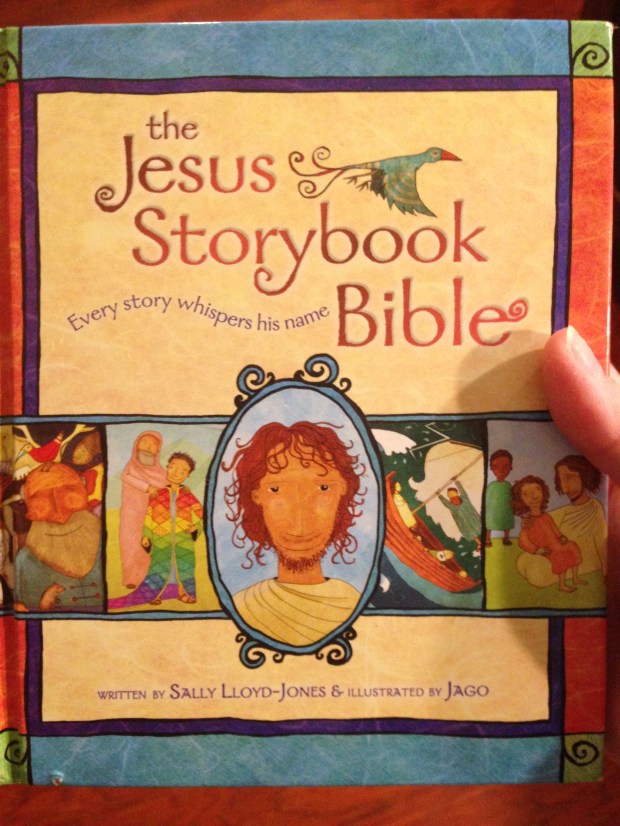
The Jesus Storybook Bible

The Jesus Storybook Bible is my favorite children’s Bible.  Every story shows how God is always pointing us to Jesus. It’s wonderfully illustrated, with sound theology and engaging retellings of the stories throughout the Bible. In fact, I’ve been known to read selections from this Bible in some of my adult classes, because it’s such a well-written book.

img_0472

The Biggest Story: How the Snake Crusher Brings Us Back to the Garden

Affectionately called “The Snake Crusher,” this book uses brightly colored, geometric graphics as it takes the reader through ten chapters chronicling the highlights of the Bible. It ends with the Snake Crusher returning to wipe away the bad and restore the good. Isn’t that the wonderful truth of God’s word?!


img_0473

The Garden the Curtain and the Cross

This is a short book with bright, lively illustrations explaining why Jesus died and came back to life. Using the phrase “Keep Out!” to describe man’s separation from God due to sin, the author beautifully explains the significance of Jesus’ death and resurrection so that man can be restored to God.

img_0475

Leading Little Ones to God

This book is an “oldie” but a goody.  Using short readings, it teaches children basic biblical doctrines like the trinity, the omniscience, omnipresence and omnipotence of God, angels, sin, the Law, forgiveness of sin through Jesus, etc.  We homeschool and used this as a Bible curriculum last year, but it would be perfect for family devotionals or for dinnertime readings where parents want to disciple their children. I used it with a 4 and 7-year-old, but it could be used for children much older, as well.

img_0477

The Ology- Ancient Truths Ever New

The Ology Music CD

This one I haven’t actually used yet, but have read through and find it looks to be a wonderful resource to teach Bible doctrines and basic catechism.  It has short readings, and lots of scripture paired with beautiful illustrations. This, too, would be a great book to use for parents seeking to disciple children with short lessons at meal-times or bed time. It has a partner CD you can order with children’s songs that correspond to the book to help expand understanding and remember the material.

And finally, check out Egermeier’s Bible Story Book.  I haven’t personally read this one, but a friend suggested it when she found out I was writing this post. I trust her judgment and she’s raised some amazing children, so I will definitely be checking into this one as well!

Do you have favorite Children’s Bible resources that you’ve used? Leave a comment for the rest of us! And stay tuned for a coming post about memorizing scripture with children!

pexels-photo-256548

But Jesus called the children to him and said, “Let the little children come to me, and do not hinder them, for the kingdom of God belongs to such as these.” Luke 18:16 


Back to Basics: God’s Word

I’ve got my steamy cup of coffee with Peppermint Mocha creamer, so grab you a cuppa and let’s get going again…

So have you been meeting with God each day? Have you found your time and place that works for you? Are you getting into the routine, a routine as common as family dinner around the table at 6:00 or getting up for work at 5:30? I hope so! Have you found a Bible version you enjoy reading or studying in?

Last week Michele shared some great logistics and organization tips on Bible study with you. Check it out here if you missed it. Later we will have some more articles on Bible study from our other writers sharing how they handle Bible study. But for today, I want to talk more heart stuff, once again with a focus on Bible study.

I remember vividly my mom & dad sitting down every night during my childhood and doing their “Daily Bible Reading.” In those days Sunday morning lesson books had recommended scriptures to read for each day of the week. I honestly can’t remember a single night not seeing them sitting at the kitchen table, each reading their individual Bibles, as I kissed them goodnight and headed off to bed. What a great heritage I had and I didn’t even realize that as a child!

A photo by Ben White. unsplash.com/photos/4K2lIP0zc_kSo with a heritage like that and having a compliant personality I started to read my Bible daily as soon as I accepted Christ at age eight. Now I didn’t understand much of it. I usually just read one or two verses. But I was learning to feed myself spiritually. Just like a little messy baby reaching for the baby food spoon or trying to feed himself Cheerios the first time, I didn’t have great success, but I was on the path to grow and learn. I missed days. I took notes in my diary on what I read. I was able to check the box of Bible reading and was making those foundational moves to be what my child eyes saw a Christian to be.

In 3rd grade I had Mrs. Mamie Latham as my Sunday School teacher. She was a godly woman with a heart for scripture memory! She gave us treats every Sunday if we memorized a new verse. I got a treat nearly every Sunday (but we won’t talk about my struggle even today with treats!) God was working into me a foundation of scripture for my life. Many of these verses I remember today.

In my teens I started reading more scripture and understanding it more. I began to see how God’s Word could be applied in my everyday life. I was very self-focused. I searched out scripture verses to help me out when I was discouraged or fearful or in need in any other way. My Bible reading was mostly about what was in it for me. But as Isaiah 55:10-11 OLYMPUS DIGITAL CAMERAtells us “As the rain and the snow come down from heaven, and do not return to it without watering the earth and making it bud and flourish, so that it yields seed for the sower and bread for the eater, so is my word that goes out from my mouth: It will not return to me empty, but will accomplish what I desire and achieve the purpose for which I sent it.” God was working a purpose in me even when I was reading His Word for self gain.

In college, older godly friends of mine began to disciple me through Navigator Bible studies. They challenged me to study the Bible deeply and memorize scripture. The “Design for Discipleship” series dug into foundational truths of scripture that built in me a knowledge of what His Word said about God and sin and man and life. During this time I was very rigid and legalistic. I either mentally berated myself for missing my quiet time or felt very sanctimonious that I was meeting with the Lord every day.

During my 20s, I began longing to really know God. I’d grown up with religion and I loved God, but during this time I began a real relationship with Him. My quiet time became something I desired to do, not just something I “should” do. I wanted to read all of His word, and to know Him like I saw more mature believers knowing HIm, and to become all He wanted me to be. I wanted Him to be my friend and to see Him move in my life.

As I grew up and married and had kids, I was invited by another young mom to a Precepts Bible study in the home of a more mature woman. I learned how to study His Word deeply, turning to research on the Greek and Hebrew words to bring scripture to life! I learned Bible history, word studies, and all sorts of “academic” means of learning about God. I got quite proud of my Biblical knowledge and though I couldn’t see myself this way at the time, I was judgmental, condescending, and a know-it-all. But God was patient with me. Trials came and the academics couldn’t get me through. I turned my heart back to having a relationship with Him.

pexels-photo-27633Over the next decade or so I grew steadily, reading His Word and journaling and praying fairly consistently, just as I had seen my parents. I went through trials and found Him faithful. And enough! I worked through insecurity and fears and character issues. His word was alive and active in me. I began to hear Him speak through His Word to specific situations. I learned to love myself “warts and all” because He does. It seemed certain verses jumped off the page or were in bold print at just the time I needed to read them. My daily Bible reading schedule astounded me that God could speak so specifically through verses that had “randomly” been scheduled months ago as the “verse of that day.”

And now I find myself an older woman.

Now I am sharing what I’ve learned. I’m still learning. Still being stretched. Still being rebuked. Still being comforted. Still discovering new things in His Word. It never ends! So take my word for this, at whatever stage you find yourself in reading God’s Word, it will not return void. It will achieve what He wants in your life, even if you are hit and miss in meeting with Him. Even if you are reading it for selfish or legalistic motives. God’s Word is alive and active in our lives. But as with many things, we may not notice the small day-to-day changes it has caused until we reflect back on who we were a year or two or ten ago!

So hang in there. READ HIS WORD! It is His love letter, instruction book, recipe book, secret message, and rare treasure in our lives. It is your bread for the problems of today and your seed that will bear much fruit in the future if you read it. It is truth. Cling to His promises for your day. I challenge you to not be like me, don’t be sporadic and undisciplined and miss out on the wealth of what God has to show you. There’s grace for that if you are, but it’s not the Best thing. Be like a Bible leader I look up to who has read the entire Bible every year since she was a teen, and she’s now in her 50’s! Oh the wisdom and joy and depth of relationship with the Father!

red-love-heart-old

Prepare a Feast (Back to Basics)

When I was a newlywed, I was a disaster in the kitchen. Couldn’t boil an egg, couldn’t bake a cake, couldn’t whip up mashed potatoes kind of disaster. Growing up I lived with a wonderful grandmother who enjoyed cooking, but I was too foolish and preoccupied to learn. As a new wife, our growing stack of take out menus only served to feed my frustration about my lack of culinary skill. Ironically, my first job was in the editorial department of a cooking magazine. It was a perfect place to study cooking, to find resources, and to ask questions. I was determined to figure out this cooking thing. Slowly, I began to learn the basics. Once I gained some confidence, I moved on to learn more advanced techniques. I’m certainly no Rachel Ray, but I am continually learning the skills I need to make a pretty yummy meal—all on my own. And while making a home cooked meal takes more time and attention, the results are undeniably more satisfying.

When it comes to Bible Study, many of us have the same problem I had in the kitchen. We never learned the skills necessary to study the Bible on our own. We become content with grabbing something from the drive through or just ordering something off the take out menu. We get fed, yes, but we’re constantly dependent on someone else to do the preparing and cooking. We appreciate the end result, but since we didn’t help prepare the food, the satisfaction is superficial and fleeting, and it can be costly. As followers of Christ, we need to learn how to feast on the Word of God, not just eat from a table someone else has prepared. There are delicacies God created for you alone to enjoy; food that nourishes your soul in a way nothing else can.

So how do we learn how to feast of the Word of God?
If you’re brand new to Bible study, or you’ve spent far too long eating from someone else’s table, here are a few tips to help you inventory your spiritual “kitchen” as you learn to prepare your own feast.

Keep it simple.
OLYMPUS DIGITAL CAMERAYour first attempts in the kitchen shouldn’t involve a four course gourmet meal. It takes time and practice to gain confidence as a cook. It’s the same with Bible study, but getting started isn’t as intimidating as it seems. In fact, Bible study is often best if you start simply.

First, pray. Ask the Lord to lead your mind, your heart, your spirit.

Second, listen to the leading of the Holy Spirit as you study.

Your first attempts may seem overwhelming or unproductive (just like my first attempt at roasting a chicken), but be diligent. Over time you’ll become more comfortable starting out with just the Word and the Spirit.

Be Sure You Have the Necessities.

spices-flavorings-seasoning-foodJust like it’s important to have your pantry stocked with the necessities, it’s vital you have the essentials for studying the Word. Unlike the pantry, the essentials for Bible study are few—just two things really–a Bible and a journal (and your favorite pen, of course). If you’re overwhelmed with the choices available, here are some helps for choosing a Bible that is the most beneficial for you.

Pick a translation: There are many translations of the Bible available—which can be a bit intimidating and overwhelming. If you were to rank them on a scale of closest to the original Hebrew, Greek, and Aramaic texts, the King James Version would be closest, with paraphrases of the Biblical text, like The Message, on the other end of the spectrum. Since the language of the King James version is antiquated, an easier-to-understand, but closer to original translation text like the English Standard Version (ESV) or the New International Version (NIV) is a great choice for Bible Study.

Study Bible or no Study Bible? Study Bibles typically have additional text that includes commentary on scripture. While these Bibles are good resources, it keeps you in the habit of depending on someone else’s interpretation of a passage of scripture. It’s a comfort and help to have instant access to delving deeper in a passage, but the goal is to learn how to discover truth on your own. Study Bibles are useful, but for your main study, use a commentary-free Bible.

Why keep a journal? There will be some days God reveals an amazing insight. There will be days you discover a new connection or revelation. There will be days you wonder why a verse or chapter is even included in the scripture text. No matter what you learn or what you’re pondering, write it down. Recording your thoughts and what you’re learning may lead you to a new discovery down the road, or it may provide some much-needed encouragement and exhortation as you continue to learn and grow.

Don’t Be Afraid to Use New Tools.

pexels-photo-211760Every cook knows having good tools makes preparing a meal much easier, but sometimes the tools can be a bit intimidating. It’s the same with Bible Study. Though using them well may take time and practice, having the right tools turns Bible Study into a great adventure in discovery.

Concordance. A concordance can help in understanding the nuances of language in the Bible. You can take any verse and look up the original translation in Hebrew or Greek. The translation gives more specific and precise definitions to the words used in the English text. This can help tremendously in gaining deeper understanding of a verse or passage. You can also use a concordance to discover where a specific word is used in other places in scripture, which helps in finding connections and giving a richer understanding.

Commentary. An excellent commentary is an essential Bible study tool. But it should only be used after you have spent ample time wading through a passage. Be cautious in choosing a Bible commentary. There are great overall commentaries by a variety of authors, like Moody Bible Commentary, or commentaries by specific authors, like Matthew Henry or Warren Wiersbe, available. Ask your pastor or a Bible study teacher who they use most often.

Bible Dictionary. A Bible dictionary will help give more insight on some of the practical details of the Bible. Say you’re unsure about the preparation of the drink offering or looking for some historical insight on Herod the Great. A Bible dictionary will offer needed details to put the pieces of the puzzle together.

Bible Atlas. So much of what happens in the Bible has to do with place. When I discovered the Garden of Gethsemane was in the shadow of Herod’s temple, the anguish of Christ in the garden before his trial and execution was even more powerful. And when I discovered how close the Israelites were to the Promised Land as they wandered in the desert those 40 years, I took away a much deeper spiritual principle from the text.

Be Sure to Share

OLYMPUS DIGITAL CAMERAOne of the best things about cooking is finding a new recipe and sharing it with friends. It’s the same with Bible Study. Whether it’s a formal Bible study or simply getting together with a group of friends, it is essential to have a place to pour out your heart. Growing with a group provides accountability and iron sharpening, and you learn much more as you listen to what God is teaching others. We were made for relationship and studying God’s Word together is a beautiful way to grow in knowledge and understanding of the Word, and a wonderful place to practice the truths you’re learning.

One of my favorite Bible study teachers Jen Wilkins says, “The heart can’t love what the mind doesn’t know.” In our relationship with God, it is so important that we get to know Him. That we develop our own deep, abiding communion with Him. The Bible is His gift to us. It is His love letter to us. It is His invitation to taste and see that the Lord is good. Too long I depended on what other’s learned about God. I sat at their table and ate of their delights. And it never satisfied my soul. When I learned to step in the kitchen and prepare my own table with the Lord, I found the morsels God gives are sweet and filling. Pulling up a seat and feasting on the Word of God truly does satisfy the soul like nothing else.

“How precious is your steadfast love, O God! The children of mankind take refuge in the shadow of your wings. They feast on the abundance of your house, and you give them drink from the river of your delights. For with you is the fountain of life, in your light do we see light.” Psalm 36:7-9

blur-old-antique-book

Back to Basics: Quiet Time

In my early twenties and fresh out of college, I was blessed to stumble upon a treasure of a book, Disciplines of the Beautiful Woman by Anne Ortlund. Anne became my mentor. I have longed for years since then to find a woman I knew to mentor me, but what the Lord finally showed me was that this woman, her writings, were the guide God put in my hands along with His word and a few other books, to grow me up. I’ve re-read the book several times. I find the key concepts of Anne’s writing are so fundamental to my beliefs that I frequently teach them as I mentor young women today.
pexels-photo-65045So, if you are like I was and can’t seem to find that flesh-and-blood mentor to have a cup of coffee and chat with, then grab a cup right now – I’ll take Green Mountain breakfast blend with one Truvia pack and 2 teaspoons of peppermint creamer – and join me for our first mentoring session!

While there are many areas of the spiritual life that need our attention, the 4 main ones we will focus on and their importance are clearly shown in The Wheel Illustration.
 wheel
This illustration shows us the fundamentals of a well-rounded Christian life: Prayer & The Word – the ways we interact with God, and Witnessing & Fellowship – the ways we interact with people. If any one of these spokes is not being tended to or if Christ is not at the center of everything we do, we risk living an out of balance, wobbly life as we roll through our days here on earth; traveling with a flat tire so to speak.
The prime spiritual discipline that is the air our spirit breathes is a personal Quiet Time with God each day (built on Prayer and The Word). No matter your age, your spiritual growth and health is dependent upon this discipline. Your spiritual life will suffocate without daily time alone with your Father.
The Set Up.
  1. Have a set place. (Mine is a cushy love seat in our living room.)
  2. Have a set time. (30+/- minutes before you normally have to get up works well.)
  3. Have the materials you need. (Listed in next paragraph)
  4. Be consistent. (Commit to do this every day for a month and your time will be firmly established and easier to stick with.)
So how do you go about it? Simple. Grab your Bible, a pen, and a notebook. That’s all you need! God has promised to give His Spirit as your teacher (John 14:26).
Resting in the fact that a member of the Holy Trinity will be teaching you, this is
The Process.
  1. Pray. Pray praising God, thanking Him, confessing sins, asking forgiveness, and interceding for others. Most importantly Pray for God to open the eyes of your heart to understand what He is teaching you through His written Word. (Phil.4:6-7)
  2. Read a portion of scripture. 
    1. Get yourself on a Bible reading plan. Look over the options in the link. If you’re new to this, one or two verses a day may seem to be all you can take in without being overwhelmed. So you might want to start slowly cruising through the book of John or Philippians a few verses at a time.
    2. Read with purpose. Don’t just read the words to check this off your list. Read trying to absorb what the scripture is saying. Ask yourself the 5 W’s and an H – Who, What, When, Where, Why, and How. Leave your reading time with the attitude that you want to be able to tell a friend about it later that afternoon.
  3. Meditate on it listening for the truth God is teaching you. This may involve praying over portions. It may mean you read back through the passage very slowly, stopping every time you are curious and contemplating what the deeper meaning is. It may mean repeating a single verse of the passage over and over to begin to memorize it. Or you may personalize the scripture by putting your own name in it or turning it into a prayer. You may want to read the Word emphasizing different words to see a deeper meaning. Or read it looking for Biblical concepts or patterns and repetitions in the passage.
  4. Journal your thoughts and prayers. Even if your time is limited as you scurry off to work, take your notebook and take a moment to journal one take away from the scripture. Maybe it’s a promise in scripture you want to cling to in the issues you are facing. Maybe it’s a command you realize you need to obey to please God. Whatever it is, jot it down. Then follow up with a written prayer to end your quiet time. It can be brief. But personally, I have found these prayers to be very revealing and healing. As I pray writing it out seeking God’s heart I often write truth I’d never realized before, blessings the Lord speaks into my heart, wisdom that crystalizes into a clear thought, or even tender loving words or words of reproof to myself. When we open a conversation with Him in prayer, God speaks back if we will just listen!
  5. One process of Bible study is called Inductive Bible study. (Check out the link. More on this in another post.) Inductive reasoning is reasoning that derives general principles from specific observations. So inductive Bible Study hinges on deriving general life principles through diligently observing His Word, praying, and listening to what God quietly speaks to your spirit.
Thanks for the coffee! I loved our first mentoring session. So now that you know how to have an effective quiet time, I guess I’ll end with the Nike slogan “Just do it.” Blessings!
pexels-photo-261577