
My daughter moved this week to the Mississippi Delta. Her husband is working at Delta State University (DSU). As I saw the green triangle, a symbol for the school, I was thrown back to high school physics and Mrs. Frankie Underwood, my outstanding physics teacher.
Mrs Underwood was a tall, buxom lady who ruled our honors class with an iron fist, yet benevolently. She expected the best of us: study diligently, turn in your work on time, make the best grade you can, pay attention in class – all the basics. If we failed to toe the line we were loudly reprimanded in front of the whole class. In her booming Southern voice she warned us that we were about to become “a lost ball in high weeds.” This was the greatest tragedy and failure in her mind. We, the brightest and best in math at our high school, to be lazy or careless or not try, to be a useful object lost by the wayside – this was failure.
She taught us about force, inertia, and friction. She ground into us the slope formula, I still remember it, m=rise over run. She made us do word problem after word problem, turning the real world into mathematical equations that were useful. We talked through  and experimented with velocity, acceleration, drag, wind and Delta, Delta V I remember particularly. We should have all become experts under her tutelage. I remember her showing us this simple equilateral triangle used to represent “change” in physics formulas. I still use that symbol in writing notes instead of writing out the word “change.” I’ve long forgotten how to compute formulas using the delta, but I still immediately think of change when I think of this symbol.
So, this weekend as we moved my daughter and son-in-law into their new apartment, change was definitely on my mind. With triangles everywhere at DSU, I would have to be blind not to think of change. But also, there were the drastic changes in their life together: an upheaval, leaving a home they’d been in since their honeymoon, a church family that was more like biological family, and all their friendships, old jobs, favorite restaurants, and sentimental places around town.
Change was heavy on my mind because my adult daughter will tell you she has never liked new things or change. She was the 2-year-old who didn’t want to learn to dunk her head under water at the pool, and was furious with me when I dunked her. She was the 8 -year-old wanting to grow up and sing solos in her children’s choir, but was fearful of the new changes she would face trying. She was the 10-year-old girly girl who was upset when her tomboy-ish 13-year-old sister suddenly wanted to start dressing more girly. She is the 27-year-old who lamented leaving her old home, friends, and church this week even though she knew an exciting new adventure awaited her with the Love of Her Life there in the Mississippi delta.
 Our world is also in a state of change – upheaval. The security we felt a year ago to just live life, spend too much money, hang out at the ball park, and hug people we met, that has melted away. The security of life operating by pretty much the same rules we had known since childhood has vanished. A willingness to share our opinions has dissipated as we feel we may be attacked for our ideas. The world is in a state of change.
Are you, like my daughter, struggling with change?
Is all of this pandemic, political divisiveness, and social unrest just too much?
Are you struggling with an underlying sense of uneasiness, worry, nightmares, depression, or anxiety attacks?
Then ladies, it’s time to do what we always do in every situation, especially in uncertain times, we turn to God’s Word.
So I take you back to the time of the Patriarchs… Jacob was a man who faced many great changes. He changed (faked) his identity with his dad to steal his brother’s blessing. He was forced to leave his childhood home in fear of his life after that, so he moved far away. He fell in love with a beautiful girl and asked her dad permission to marry her, but his father-in-law changed out the bride on him! He went into marriage single and care free, and within a week had TWO wives and a battle of jealousy on his hands. He had 11 sons and decided to head back to his parent’s homeland only to find out his father-in-law had changed out the sheep to keep Jacob and his wives there. Jacob’s life changed with grief at the death of his precious Rebekah. Then he had grown sons who acted with jealousy against their brother and caused Jacob grief again at the loss of a favored son. He faced the changes of environmental factors as famine hit, which triggered more risk and loss. His whole world was rocked when he found out his dead son was really alive! And finally, in his last days he had the huge change of moving to Egypt to live out his days.
What can we learn from Jacob about change?
9 Jacob said, “O God of my father Abraham and God of my father Isaac, O Lord, who said to me, ‘Return to your country and to your relatives, and I will prosper you,’ 10 I am unworthy of all the lovingkindness and of all the faithfulness which You have shown to Your servant; for with my staff only I crossed this Jordan, and now I have become two companies. 11 Deliver me, I pray, from the hand of my brother, from the hand of Esau; for I fear him, that he will come and attack me and the mothers with the children. 12 For You said, ‘I will surely prosper you and make your descendants as the sand of the sea, which is too great to be numbered.’” …
24 Then Jacob was left alone, and a man wrestled with him until daybreak. 25 When he saw that he had not prevailed against him, he touched the socket of his thigh; so the socket of Jacob’s thigh was dislocated while he wrestled with him. 26 Then he said, “Let me go, for the dawn is breaking.” But he said, “I will not let you go unless you bless me.” 27 So he said to him, “What is your name?” And he said, “Jacob.” 28 He said, “Your name shall no longer be Jacob, but Israel; for you have striven with God and with men and have prevailed.” 29 Then Jacob asked him and said, “Please tell me your name.” But he said, “Why is it that you ask my name?” And he blessed him there. 30 So Jacob named the place Peniel, for he said, “I have seen God face to face, yet my life has been preserved.” 31 Now the sun rose upon him just as he crossed over Penuel, and he was limping on his thigh. Genesis 32
Jacob learned…
- He learned that God speaks to us in our moments of change.
- He learned that God blesses us and is faithful to us.
- He learned that we have a choice – to choose God as our own Lord or to live with our old sinful, deceptive ways.
- He learned to revere God as Holy.
- He learned how to trust God through all the change, deception, betrayal, and loss.
- He learned that God is a gracious provider and deliverer.
- He learned not to fear, but to trust.
- He learned to wrestle with God in prayer in the middle of the night, and to not let go of Him.
- He learned that God can give you a new name, new habits, and a new identity when He becomes Lord of your life.
Don’t fear change, ladies. Embrace it. Learn from it. Seek God in the middle of it. Stay in His Word, listening for Him to speak to your heart. Pray. Let Him find you there in your fear and wrestling, and He will bless you and give you a new name. And don’t be A Lost Ball in High Weeds! Live with Him in faith and fulfill your potential in His plan!

Do not fear! Change is all around in the world Our Creator made!

 I neglected to say that it had rained all through the night before this picnic adventure. I did say it was a rutted road and a clay road. I also neglected to say this dam was at the bottom of a long, somewhat steep grade. As my husband started up the first bit of incline in the road our tires spun a bit. He kept trying and spinning for a minute, then realized he probably needed to back up to a flatter place and get a running go at The Hill. Second and third try had the same basic result – either tires would spin or we’d run into one of the deep ruts and get stuck and have to back down The Hill to get out. It was then that fear came creeping in.
 had to look it up, but they are called aircraft marshallers.) My job was to stand a couple of hundred yards ahead of him at the top of The Hill and use arm motions to direct him left or right to try to keep him away from the deepest ruts and slickest spaces, since we didn’t know if our patching would be completely helpful.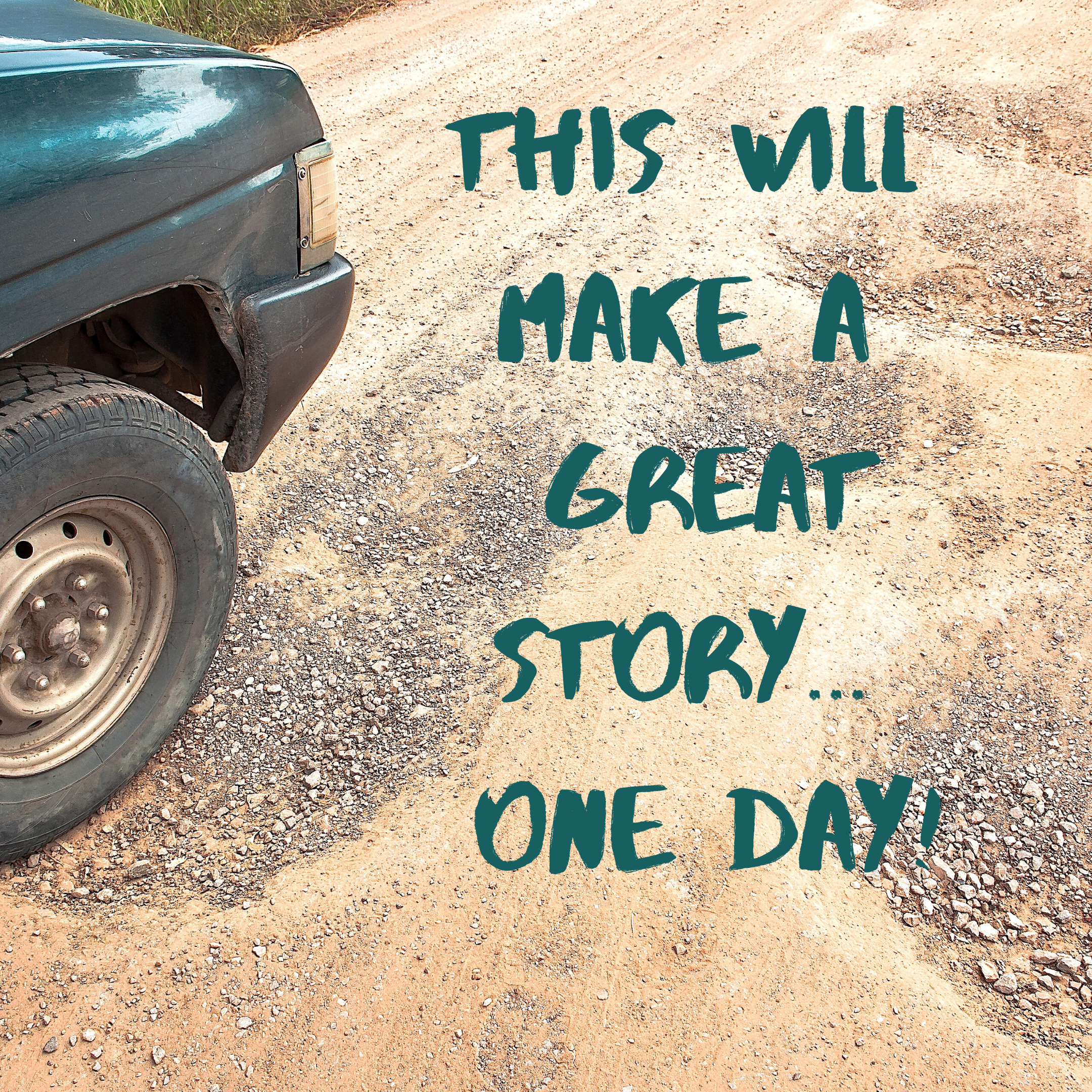
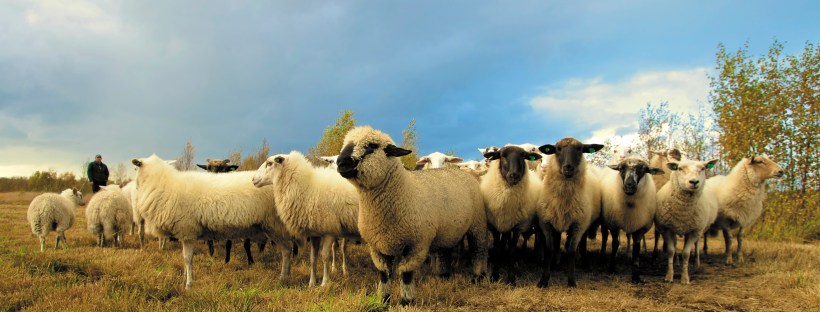


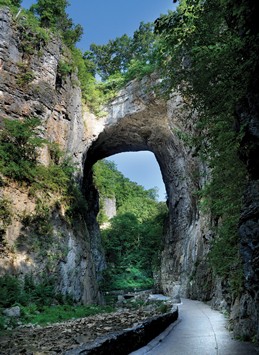 Parkway the six of us had set off that morning to visit Virginia’s Natural Bridge and surrounding outdoorsy tourist attractions. The day was great fun. The 4 kids were between the ages of 6 and 16, so they were independent and adventurous. We hiked and took photos, read historical markers, and marveled over the rainbow trout in the crystal clear creek that runs under the this non-manmade bridge.
 Less than a mile up the foothills, I looked down at our gas gauge. It was just short of the big red E – Empty! (This is not uncommon for me, so the whole family was giving me a hard time.) I quickly found a scenic pull off where I could turn around. The kids were a little nervous we wouldn’t make it back to get gas, but dad assured them he’d seen a gas station at the last little community we’d been through and that he was pretty sure we could coast to it if we ran out of gas.
 Stay in our lane. Keeping our eyes on the lines to stay in our lane spiritually means to be in God’s Word daily – as often as possible. The Psalms, all the wisdom books, Paul’s letters with comments on how to live and how to treat others, and the stories of the Old Testament that teach us about God and about people are crucial to read and know to stay in our lane. Once we’ve read them, then it is our job to live out the truths scripture teaches.


 “others” means men as well as women. We don’t overlook the sin of either sex, but we also don’t condemn them as a whole group. Each person is accountable for his (or her) own sin and will bear the punishment.


 In early times, only blurry images were seen, images reflected in water or a polished stone. During the time the Israelites journeyed through the wilderness polished bronze was used for mirrors. We are told in Exodus 38:8, “They made the bronze basin and its bronze stand
 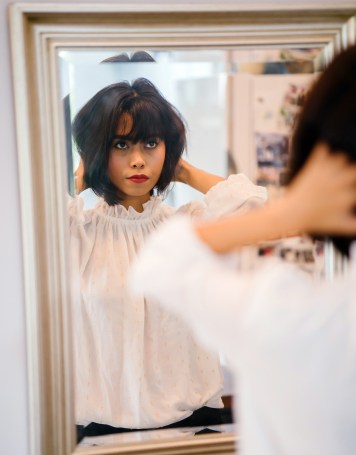 To see ourself clearly it’s a two-step process. We need to first listen to the Word – read it, hear it, take it in. Second, we need to continue in it, to DO it. Do the Word – even when it doesn’t make sense. Do the Word – even when it is uncomfortable. Do the Word – even when it is inconvenient. Do the Word – even when it stretches our faith. Do the Word – even when it makes us appear to be the oddball. Just Do It – as the slogan goes.
 Are we like glass? Do we have a bit of reflectivity, but people can see right through us? Do others see in us a dark, murky, indistinct, tainted “truth?” Or are we like a mirror, backed with substance. A substance refined and pure that gives a clear image to the one staring into it? Are we backed with God Himself, His Word, and His principles that give us substance? When someone looks at us, our words, and actions, do those things reflect back to people the picture as God their Creator sees them? Or are we thin and breakable and less reflective of God’s views of humanity, instead reflecting a half-worldly view to those we meet? Let’s not bet one more human-based piece of glass reflecting back a dim image to those around us. Let us be the hand mirror of the Lord, reflecting His beauty, glory, and truth to the world.
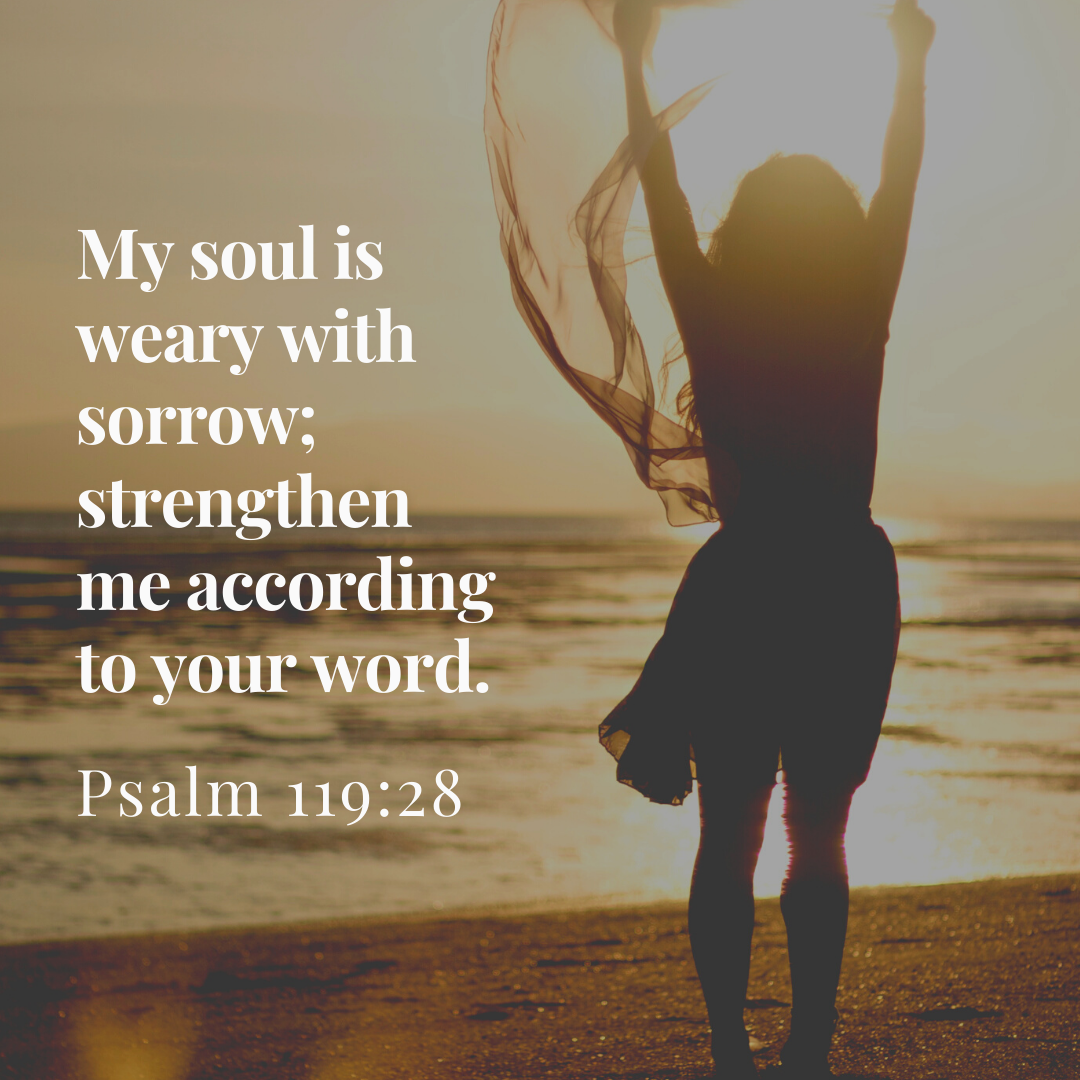 My opinion is right why can’t they see it. Everyone taking a side and criticizing their fellowman. If we live in this mindset of constant arguing and fear of disease, checking hospitalization and death statistics and depending on human wisdom, we will find ourselves in a state of weariness at the least and deep dark depression at the worst. So what is a woman of God to do?
 Priceless