
Boundaries are important.
In the old west, ranchers had fences. Or on the really huge tracts of open pasture they branded what they owned to show it belonged to them and was under their authority. If you’ve ever watched a 1960 cowboy show you’ve seen this. What always happened on Gunsmoke or Bonanza? A guy in a black cowboy hat (bad guy) was rustling cows, robbing the stagecoach or train, blocking water rights, or taking over land illegally. And the guy in the white hat (good guy) always came to the rescue of the damsel in distress whose possessions or boundary was threatened.
Boundaries are important. From Genesis 1 God established boundaries. He separated light and dark, heaven and earth, land and sea, work and rest, and he made distinction in kinds of animals and plants. In Genesis 2 He established a separation, a boundary, between male and female. He set very distinct boundaries for the beautiful home He had made for Adam and Eve (verses 10-14). He set a boundary of what they could and could not eat. By chapter 3 (out of 1,189 chapters in the Bible) the Enemy had already come to tempt Adam and Eve to push the boundaries. And they did. And there were consequences: doubt, greed, rebellion, sin, but also hiding from God, fear, deception, broken relationships, blame, strife between women and men, unfulfilled desires, domination, pain and toil all their life, thorns & thistles, sweat, separation, loss of the simplicity of a beautiful life, and death. They were now outcasts of the Garden.
 Today the Enemy still does the same thing. He tempts humans to push the boundaries. When they do, just as with Adam and Eve, people experience the devastating consequences too. Life and relationships are marred with pain and betrayal and separation and other negative consequences because individuals don’t honor those boundaries as God’s Word instructs us to, but instead ignore moral boundaries, marital boundaries, property boundaries, societal boundaries, and legal boundaries – just to name a few of the most common violations.
Blessings follow as children of God obey and honor boundaries.
Property Boundaries
Except for kleptomaniacs, this one boundary seems pretty easy for the average Christian to honor. Think: I don’t want anyone to steal my lawnmower, so I’m not going to steal yours. Makes sense. Easy, right?
Or is it? What about the office supplies that end up at the house, taken home with good intentions, to do some work, but the surplus never returned? Hmmm. Or how about the $20 bill found on the sidewalk, tucked in the pocket, as the new owner walks merrily away singing “Finders keepers, losers weepers”? Hmmm. Need I go on? Vigilance is required in order for Christians not to find themselves going over those giant bumps of a mega slide headed down a slippery slope.
Moral Boundaries
Most people consider themselves to be moral people. They understand right and wrong. If someone lies it is a betrayal of trust. If another woman steals someone’s husband, anger and a break in relationship is a correct response. Society understands that it should protect the innocence of children and the fragility of the elderly and infirm.
Often moral boundaries don’t become an issue for Church folks until they find themselves halfway down that slippery slope and starting to grab at any handhold along the way including denying, justifying actions, lying, and manipulating people and circumstances. Often a person will give in to temptation the first time in a small way without even realizing it, unless they are vigilant. For example: At work a married woman makes a business call to a man. At the end they share a silly joke and laugh together. She hangs up. Her day is brightened. Nothing wrong with that. However, Satan has cracked open a door. Does she have the safety chain on the door? If not, she may find herself developing a friendship, enjoying the attention of that man, spending time fondly thinking of him, accepting his flirty compliments, and then she finds herself in a spot. She is flirting with a moral boundary she never saw herself having to deal with.
To keep moral boundaries secure, a woman must be vigilant with her thought life! She can lie to herself if not careful.
Relational Boundaries
What are relational boundaries? These are the interpersonal skills of how a person takes care of their own inner needs and outer duties and commitments. They help distinguish a person’s unique identity from that of another person. These boundaries are essential for leading a healthy, balanced life, and they include physical, mental, emotional, and spiritual boundary lines. Frequently, people struggle with these type boundaries because of their personality traits or habits developed in their upbringing. Consider the following.
Ever met a person who seemed to have never grown up? It’s not always obvious what issue they have, but a person hanging around them may end up feeling a pull to take on responsibilities that are not theirs, either materially, physically, mentally, spiritually, or emotionally. The person continually borrowing the $10 that is never repaid. (Material boundary.) The person wanting someone to come to their rescue in a crisis, but then never reciprocating. (Emotional/physical boundary.) The teen whose bedroom is cleaned by Mom, only to have it back in the same shape within 6 weeks, which then ignites Mom’s anger at them that they aren’t taking care of their responsibilities. (Physical/mental boundary.)
 On the flip side of that are the people who seem to never need anyone. It is apparent that they could use a hand, but they continually decline all offers and send the message, “I got this.” They are walled off in a self-protective way that allows very few people in. (Emotional boundary.) They have a rigid boundary of self-protection, that surely does keep the bad out, but also prohibits good from entering.
Then there are individuals that sin and suffer consequences but never accept the truth that it was their sin that caused the problems. They still want to point fingers and play the blame game which cycles them into more sin, because blame is lying (saying it is another’s fault when it is not), and these lies are keeping the person distant with their Heavenly Father. (Spiritual boundary.) This boudary issue keeps God at a distance and keeps the boundary-less person from reaching full repentance and resolution. The Gospel “brings hostile parties together (Colossians 1:21) and heals relationships between God and humanity, and between people.” (Boundaries, p. 135)
All of these people have boundary issues.
Henry Cloud, in his book Boundaries, reminds Christians of the need and purpose of relational boundaries. The purpose of boundaries is two-fold: to keep out things that will harm and to allow in things that will nurture. They should be like fences with a gate, not walls. Things and people come and go in life for a person’s good if they exercise appropriate boundaries. No one is required to allow angry or abusive people into their lives. However, scripture does command us to forgive them. Forgiveness means turning them over to God and letting them off our hook, not allowing them to keep harming us. As for the second purpose of boundaries, if Mrs. Lone Ranger is acting in a self-sufficient manner, she’s missing out on her deep relationships and needs being ministered to, but she is also depriving others in the body of Christ of an opportunity to exercise their God-given gift of mercy or exhortation or service or giving. Each member of the body of Christ must minister and be ministered to, just as the cells, tissues, and systems of our physical body work together yet are independent in their purposes. They each carry out their own job, but are supported by other parts doing their own jobs as well.
Roping our Steer
 It’s time to grow up Little Cowgirls! We need to grab our rope, mount our horse, and chase that steer that belongs to us. We are responsible for things within our boundaries. Are we taking care of them? Or are we trying to pass the blame just as our sister Eve did? Just as God gave Adam & Eve responsibilities and boundaries, He has given us responsibilities and boundaries.
How are you most tempted, to push the boundaries morally? To not handle relational boundaries appropriately? It’s time to learn how to set boundaries. (Check out the link above for more info.) It’s time to exercise self-control. Call your spirit to attention in Jesus’ name and have a talk with it, or allow Him to speak. Speak scriptural truth to yourself, immerse yourself in God’s Word, memorize it, purify your mind, and pray.
Colossians chapter 3 is full of wisdom on how to shape up boundaries. If a woman spent all her mental effort living out the commands of this one chapter, boundaries would be a tiny issue if any issue at all.
“Set your minds on things above, not on earthly things. For you died, and your life is now hidden with Christ in God. When Christ, who is your life, appears, then you also will appear with him in glory.” (3:2-4)
“Put to death, therefore, whatever belongs to your earthly nature: sexual immorality, impurity, lust, evil desires and greed, which is idolatry.” (3:5)
“But now you must also rid yourselves of all such things as these: anger, rage, malice, slander, and filthy language from your lips.” (3:8)
“Do not lie to each other, since you have taken off your old self with its practices and have put on the new self, which is being renewed in knowledge in the image of its Creator.” (3:9-10)
“Therefore, as God’s chosen people, holy and dearly loved, clothe yourselves with compassion, kindness, humility, gentleness and patience. Bear with each other and forgive one another if any of you has a grievance against someone. Forgive as the Lord forgave you. And over all these virtues put on love, which binds them all together in perfect unity.” (3:12-14)
“Let the peace of Christ rule in your hearts, since as members of one body you were called to peace and be thankful.” (3:15)
“Let the message of Christ dwell among you richly as you teach and admonish one another with all wisdom through psalms, hymns, and songs from the Spirit, singing to God with gratitude in your hearts.” (3:16)
“Whatever you do, whether in word or deed, do it all in the name of the Lord Jesus. (3:17)
“Wives, submit yourselves to your husbands, as is fitting in the Lord.” (3:18)
“Children, obey your parents in everything.” (3:19)
“Do not embitter your children, or they will become discouraged.” (3:20)
“Whatever you do, work at it with all your heart, as working for the Lord, not for human masters.” (3:23)
Christ is your life! Go live your life with those boundaries!

Life with boundaries can be beautiful!
 As I was about to run a quick errand and then go to the track to walk, I grabbed a neon yellow shirt – one that is really NOT in my color palette and therefore I only use for exercising – and threw it on thinking I wouldn’t be in the store long and I didn’t want to get a shirt I liked sweaty when I exercised.
 I asked God if He was disappointed with me? No answer. But my first thought was of the Believing God Bible study I was in at the time. So I decided while walking to the register that I was going to simply pray and believe God to use our chance meeting in her life. Whether she were to find me on Facebook by some weird mutual friend thing or for us to bump into each other again or for this to be all I would ever know of her until Heaven, I believed God that He had a purpose in our meeting and would work it out for His glory.


 And last, see the good in that tree. Count your blessings. My tree has a cheerful little squirrel who chatted with me every day of my vacation and a gorgeous green canopy that shaded me from the heat of the afternoon sun. It’s massive presence reminded me of the strength and stability of the Father, and it’s leaves offered pleasant whispers in the breeze. Your obstacle has hidden blessings too. Maybe it restores a broken relationship, brings a new friend into your life, humbles you, makes you sit still and enjoy the moments more, changes the direction of your child’s life, or causes you to listen and understand new life lessons. God is using it in your life.


 I didn’t get any farther before the wails started. You would’ve thought I was physically beating him. He squirmed and cried and begged, “Noooo, Mommy! Don’t lick me!” I managed to give him all six licks, just like I was enjoying a Tootsie Pop, even amid the squirms and tears. When it was over he ran to his room crying as if his heart was broken.

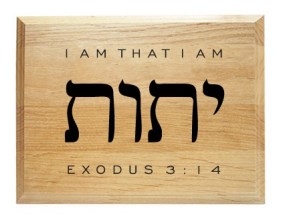
 Here in Exodus 3, He is making Himself known to us by who/what He IS rather than what He DOES. He is defining Himself for us with a “being verb” not an “action verb.” Now I’m a teacher. And I love English. So I really get into this. Action verbs show action. Duh? Words like run, play, create, read, serve, pray, witness… Whereas “being” verbs are words that relate what something is. There are 8 of them: is, am, are, was, were, be, being, been. And by using this kind of verb He is identifying Himself as He hopes we will identify ourselves. By who we are more than by what we do. That’s what He wants from us. He wants us to “be” His, to “be”-come more like Him internally.
 The “Be”-ing should come before the “Do”-ing. Look at James 1:22 again. It says we are to “BE doers of the word.” Many of us sacrifice time alone being with the Lord in a quiet time and becoming who He wants us to become in order to do, do, do. We read this verse and believe God wants us to “be a
 questions. The constant stream of laundry – Mt. Never-Rest, as my friend Susan calls it – is a major feat to be accomplished in any given week. Rocking babies, clearing the toys away, rushing to t-ball or gymnastics or whatever, cleaning house, and the constant cooking and dish-washing go hand in hand with the laundry to use up many of the hours in your day. Been there. Done that.
 If you are at that stage of life where spit-up on your shirt, puffy eyes from little sleep, and day old ponytail hair seem to be the hallmark of motherhood, take heart! It won’t always be this way, In fact, these days pass much too quickly, taking their joys and wonder away with them. But what do you do in the meantime, in this phase of life where purpose and meaning can feel lost or we can feel insignificant?
 So if I could go back in time, I’d tell Younger Me – Savor the moments! Welcome the distractions! Sit down and play. Hug and love on those little ones. One day you will wish you could again. Supper burns – oops! Laundry is piled high – who cares. You eat PB&J sandwiches again – so what! Your house isn’t a Southern Living showcase – there’s another season for that. In years to come, what your heart will rejoice over or regret is the hugs, kisses, moments of joy, and memories made with your family – or the lack of those.
 Those are the worthwhile things to invest our time in that have eternal consequences. In the down moments you have between the demands of motherhood, do you reach for God’s Word or for the smart phone?

 That little phrase sprang out of a similar conversation years ago. One of us (most likely me, I’m the whiner – my sisters-in-law the wise ones) was lamenting over a “creative opportunity” (problem), and explaining what we thought God should do in the situation.
 Each of us has control issues. We think we know best, and if the rest of the world would just listen to us things would be ok. We believe we sit at the control center of our own lives. Occasionally, we will let loose of our grip on the reins of control – after all, we’re generous people – as long as what the people around us do is tolerable to us. But when things begin to rub us wrong, we jerk those reins right out of the hands of our husband, children, friend, whoever dares to have a differing opinion on an important issue. At that point our pride and selfishness and sin nature kick in. We all need someone there to tell us our omnipotence is showing.

 to teach others how to handle their finances wisely. God blessed my sister-in-law with a seminary degree that she uses to bless preschoolers and their parents. He blessed my husband, myself and our children with a run-in with Leukemia which taught our hearts more in one year than I had learned in the 36 years before, and allows us to bless others in similar circumstances with compassion, prayer, and help in their desperate times. He blessed a retired lady I know with time on her hands to go to doctor’s appointments with people and take them meals and be a help in many ways. He blessed my friend Fran with an excellent job and she in turn blesses servers at restaurants with 100% tips. Yes, I said 100%!
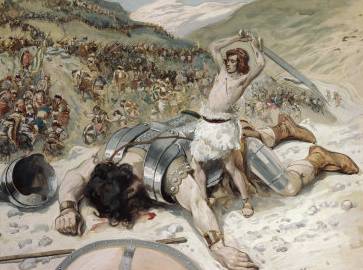
 Over the next few months we would be so grateful to be there to receive answers, healing, and life-saving treatment.
 I would love to tell you that I handled the physician’s diagnosis that day with faith, totally depending on God, but that wouldn’t be true. My first reaction to this news was fear. I danced with denial, tried to brush off reality, but finally came up against a wall in a hematology office. Cold fear gripped me so much that it was a physical sensation down in the depths of my stomach. I lived for weeks with fear as my constant sidekick. I cried. I prayed desperate prayers. I freaked out to any friend who would listen. I lay awake in the night staring at my sweet husband trying to memorize his face in case he died. I kept going to church regularly, sitting in the back weeping the whole service. But sadly, what I did not do was I did not choose the path of faith right away. Over those months I learned that when we can’t see what lies ahead we have a choice to make: to walk by faith or by fear.
 After that day we faced chemo, neutropenic fever, hospital stays, bone marrow biopsies, blood tests, isolation rooms, doctor visits and all the other not-so-fun things that go with cancer treatment. It was a long, tiring, often emotional journey. But we learned what mattered in life and what didn’t. We learned to walk by faith, not fear. We learned how deeply the Father loved us. We learned that Christ’s sacrifice on the cross for us was our treasure.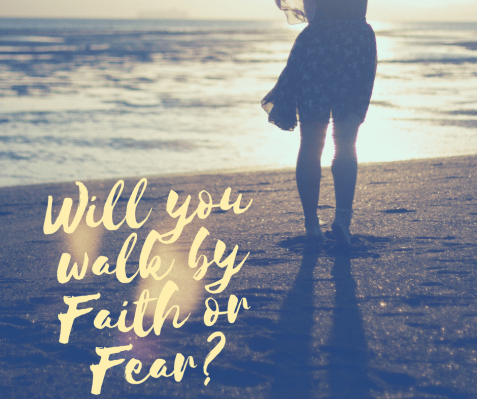
 Priceless